La Retraite des Capucins dépend de la prière, du travail bénévole et des dons financiers pour poursuivre son ministère. Donner maintenant

Attitude nationale

Par le Père Tom Zelinski, OFM Cap.

Récemment, j'ai été frappé par le commentaire d'un homme à la radio. Il parlait de l'humeur du pays. Avec une certaine tristesse, et peut-être avec sarcasme, il a suggéré que beaucoup de gens dans ce pays ne sont pas attachés à la liberté, à l'égalité et à l'attention portée à leurs concitoyens, mais que l'attitude de beaucoup est “Personne ne peut me dire ce que je dois faire”. Il a suggéré que c'est ce que signifie pour certaines personnes être un citoyen américain : “Personne ne peut me dire ce que je dois faire !”

Bien sûr, il n'y a pas eu d'enquête scientifique pour déterminer combien de personnes pouvaient penser ainsi, et il s'agissait de l'opinion d'un seul homme. Mais à en juger par les comportements rapportés dans les médias, cet homme pourrait bien avoir raison. Et si c'est le cas pour un grand nombre d'entre nous, alors nous sommes dans le pétrin. Eh bien, nous avons eu des problèmes, surtout depuis mars, lorsque le monde a changé.

En tant que pays, nous avons grand besoin de réconciliation, de guérison et d'acceptation de l'autre. Nous avons besoin de nous respecter les uns les autres, même si nous reconnaissons nos différences. Nous devons dépasser notre tribalisme et notre loyauté envers les partis, qui font que “l'autre côté” a toujours tort, voire est dangereux. “Comment peut-on voter pour ce type ? disent les uns et les autres.

Même parmi ceux qui se disent chrétiens, il semble que nous nous soyons éloignés des formules “Heureux les pauvres en esprit” et “Heureux les artisans de paix” et de l'amour de notre prochain comme de nous-mêmes.

Nous devons passer de l'idée que “personne ne peut me dire ce que je dois faire” à un esprit qui consiste à regarder autour de soi pour voir ce que l'on peut faire pour quelqu'un d'autre.
Blindness and Sight

Par le Père Tom Zelinski, OFM Cap.

The Gospel for Monday of the 33rd Week is the story of the healing of a blind man . The stories of healing the blind are not only about the cure of one person; they are meant to point further to the issue of personal or spiritual blindness.

I can still hear an old recording by Franciscan priest Richard Rohr where he says emphatically, “It’s all about seeing, brothers and
sisters!” And he and other wise people have reminded us that when we look at anything, we see things not so much as they are, but we see as we are. In other words, as we look at the world, at current events, at our relationships, we see from a foundation of our own bias, perspective, and prejudice.

If we want to grow and deepen and mature in our spiritual lives, or in our human lives even aside from religion, we are invited to be aware of our own biases as we look at the world and people around us. We are invited to admit we may not be seeing clearly, with our eyes and our minds. This admission enables us to be open to more learning and understanding.

A classic example is the husband and wife who, after the children have left home, look at each other and say “I don’t know you.” They need to look and look again. The message is there for all of us. We can look and look again at our world, and keep praying the prayer of the blind man, “Lord, please let me see.”

November

Par le Père Tom Zelinski, OFM Cap.

We are about halfway through November. For many people, this month has two major themes: remembering those who have gone before us and giving thanks.

For Catholics, this month begins with All Saints Day, on which we celebrate all those millions of persons who have gone before us in the Church and who remained faithful in their lives. We honor those whose names appear in the calendar of the Church year. There are many more whose names can be found in collections of the lives of the saints.

Beyond those, there are others who remain anonymous to us, but who indeed lived good and faithful lives. Often these holy ones also suffered much on their life’s journey. Being holy and faithful does not guarantee an easy life!

We can include in the collection of holy people those whom we have known personally, who were our teachers and guides and good example for us along the way.

The day after All Saints is the Commemoration of the Dead, or All Souls Day. It has been Catholic tradition to pray for the dead who may still need further transformation after death on their way to final eternal happiness. This remains in the realm of mystery. But November can be a time of memories about our relatives and acquaintances who have gone before us.

November also calls us to gratitude, giving thanks. That can be a great part of our remembering the saints and our beloved dead. We are grateful to God for them. And then we give a special day to giving thanks. Thanksgiving Day is not a feast of the Church, but in our faith we can easily make it a kind of Holy Day, not by any law or obligation, but simply because we see the value of giving thanks for all our blessings. This year, there may be a certain flavor to our Thanksgiving, because of all that has happened in our world.

But it is part of our life of prayer and worship to be thankful. Eucharist, a word meaning thanksgiving, is at the center of our lives, no matter what is happening to us, good or bad. This year it may take a bit more discipline to find things for which to be grateful, but we are called to do that as part of our faith, not to mention our mental health.

Spiritual but not Religious

In recent years we have become familiar with the term, “spiritual but not religious.” This refers to people who believe in God or the spiritual realm or the universe, but do not belong to an organized church or religion. There can be many types or degrees of such spirituality.

Some come from families who never belonged to organized religion, but who still show some interest in spiritual things. Some have belonged to a church but have simply drifted away from participation and now vaguely connect with the idea of God or the spiritual realm.

Some others have left organized religion after careful thought and prayer. They may have disagreements with their church, its teaching and practice. They find they are not “being fed” in their personal lives. These can be very active seekers, trying to find meaning and who still may be open to an organized church that appeals to them.

Critics of the “spiritual” people may consider them “flighty” or selfish or wanting to be their own religion. We should be careful in judging. First of all, we who belong to organized churches ought to be careful that we are also “spiritual” in the sense of developing our own personal lives of prayer within our structures. Some of the conscious seekers may be more sincere than some of us.

And we need to be welcoming, when the seekers perhaps approach our church door, that he or she will find the spiritual hospitality they need. There are many paths, many journeys into the truth and light of God.

Frères et sœurs

Par le Père Tom Zelinski, OFM Cap.

Le contenu ou le thème principal du discours du pape François’ nouvelle encyclique semble être un rappel d'idées issues des Évangiles et de l'esprit de la pensée franciscaine : nous sommes tous frères et sœurs, enfants de Dieu, et les implications de cette réalité. Nous avons déjà entendu ces choses.

Mais le Saint-Père souhaite renforcer ces convictions fondamentales lorsque nous sortirons de la pandémie, quelle qu'elle soit ! Il veut que nous tirions les leçons de notre expérience en cette période de maladie et de souffrance. Dans quelle mesure avons-nous pris soin les uns des autres, partout dans le monde ? Comment n'avons-nous pas pris soin les uns des autres et qu'est-ce qui pourrait être amélioré pour changer cela ?

Il appelle notamment à l'amélioration des systèmes de soins de santé et à l'examen des raisons pour lesquelles, dans certains endroits, tant de personnes sont décédées et n'ont pas reçu les soins nécessaires. Cela dépend toujours en partie des ressources matérielles. Plus les gens sont pauvres, moins ils ont accès aux soins de santé.

Le Saint-Père nous interpelle donc sur notre vision des forces économiques, et remet en question nos modes de capitalisme et de matérialisme. Comment partager les biens de la terre avec tous nos frères et sœurs ? Parallèlement, il parle également de notre souci de la terre elle-même, ce qui n'est pas sans rappeler son autre encyclique, Laudato Sí.

Certaines de ses paroles peuvent déranger les capitalistes purs et durs, les matérialistes et les hommes d'affaires du “libre marché”. François fait écho aux défis lancés par les papes qui l'ont précédé, dont certains sont aujourd'hui qualifiés de “saints”. Les Évangiles et l'esprit franciscain nous invitent à repenser nos priorités capitalistes, matérialistes et individualistes. Nous sommes frères et sœurs les uns des autres et de toute la création.

Distanciation sociale

Par le Père Tom Zelinski, OFM Cap.

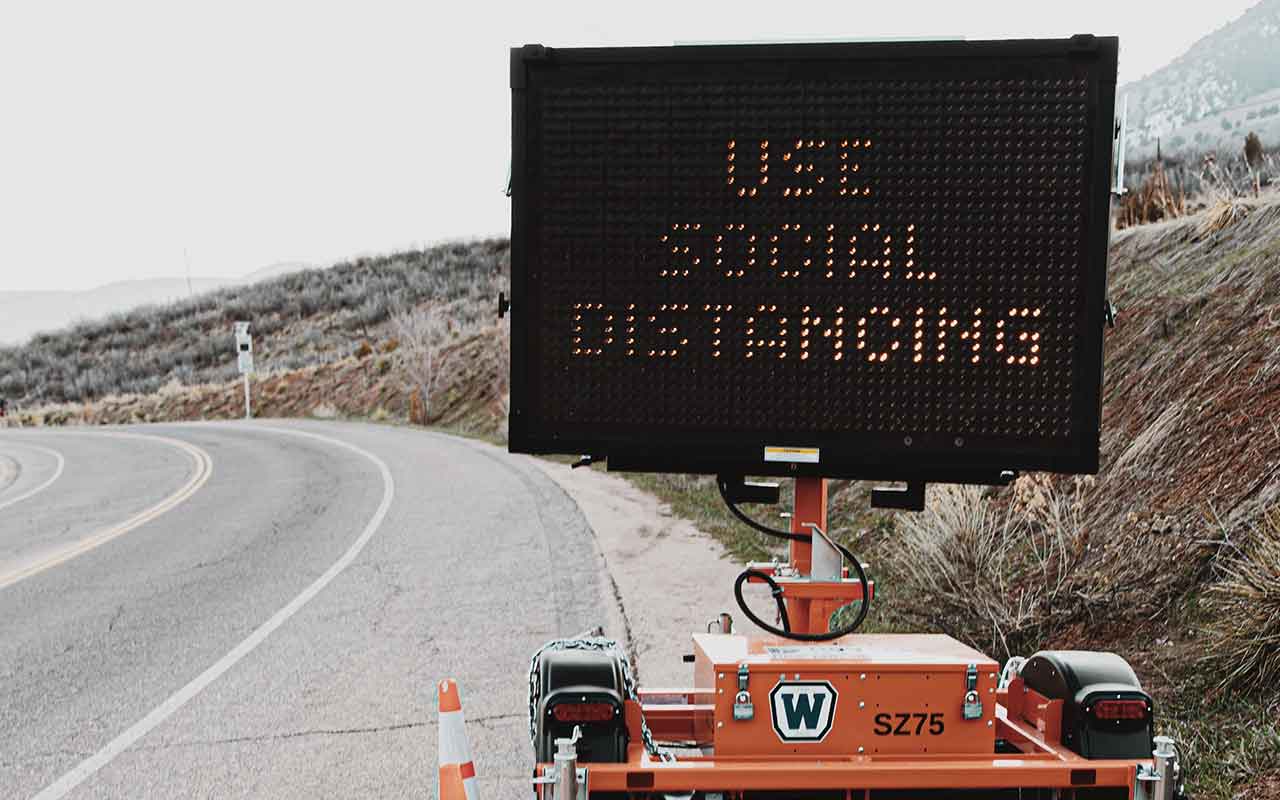
L'expression “distanciation sociale” fait désormais partie de notre langage. De nos jours, nous gardons nos distances. À l'église, nous nous asseyons à l'écart des autres. Dans les magasins et les bureaux, nous voyons des marqueurs sur le sol, indiquant où se tenir. Les rassemblements sont limités en nombre.

Nous évitons les contacts humains familiers. Les poignées de main sont rares. Les accolades sont moins fréquentes. La main sur l'épaule est évitée. Pas tout le temps, mais en général, nous sommes conscients de la vie à l'ère de la pandémie. Au moins, nous nous donnons quelques coups de coude dans la bonne humeur.

Je me demande ce que cela nous fait. Un jour, on étudiera les “coutumes sociales en période de pandémie”. Notre éloignement plus marqué a fait des ravages dans les familles qui ne peuvent pas rendre visite à leurs proches dans les hôpitaux et les maisons de retraite. De nombreux décès surviennent en l'absence de la famille. Les membres d'une famille en bonne santé choisissent de ne pas se rendre visite, par mesure de sécurité. Cela doit certainement affecter notre vie mentale et émotionnelle.

Je me demande également si tout cela ne nous apprend pas et ne renforce pas quelque chose en nous : combien nous avons besoin de contacts humains et combien nous avons besoin les uns des autres. Peut-être que tout cela peut nous permettre d'apprécier davantage les personnes importantes de notre vie. Pour l'instant, nous pouvons nous efforcer de tendre la main par le biais de nos communications électroniques et de l'écrit. Oui, des cartes et des lettres !

Et lorsque cela deviendra plus possible, nous apprécierons peut-être encore plus la poignée de main et l'étreinte chaleureuse, et le fait de nous tenir à côté de l'étranger dans l'église.

Signes et merveilles

Par le Père Tom Zelinski, OFM Cap.

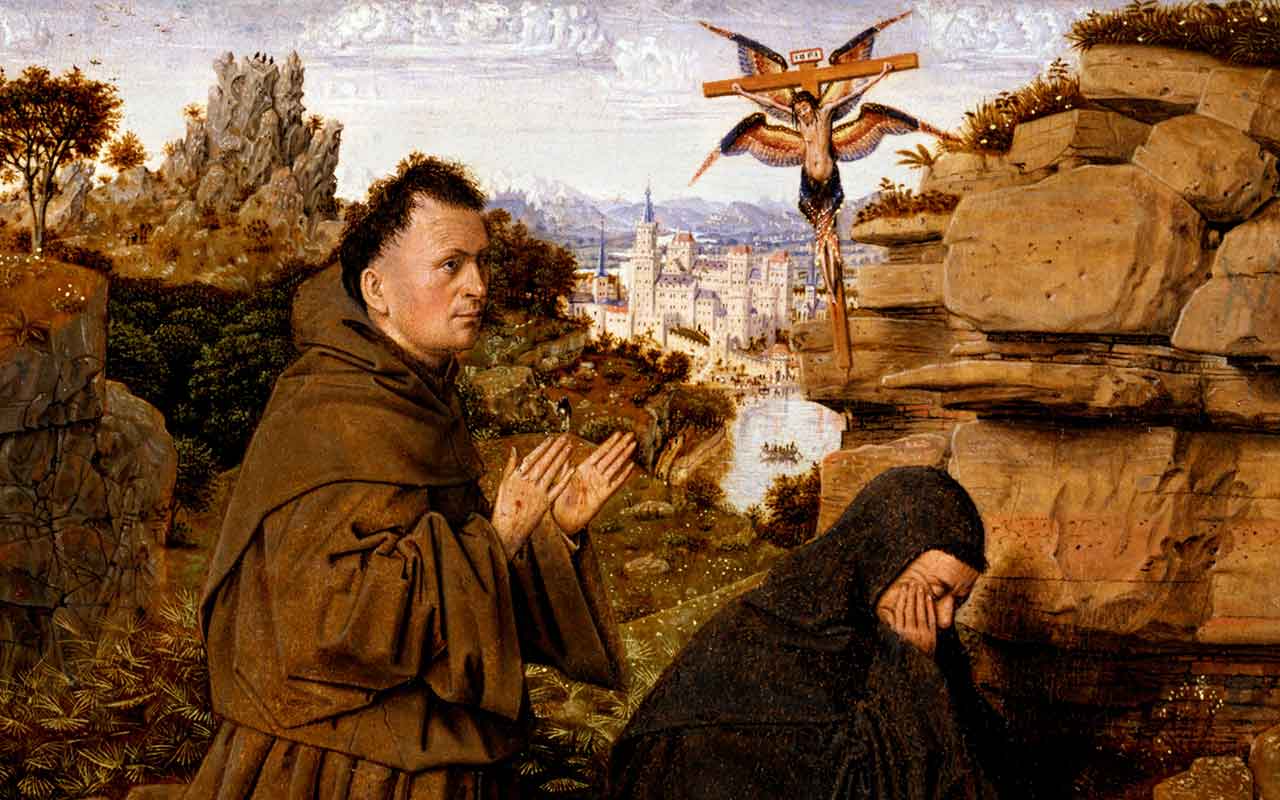
Au cours de la semaine dernière, le calendrier franciscain nous a offert deux jours de fête caractérisés par des phénomènes inhabituels, des “signes et des prodiges”. Le 17 septembre, nous avons célébré la fête des stigmates de saint François d'Assise, qui honore le fait qu'il ait reçu les plaies du Christ dans les mains, les pieds et le côté. Le lendemain, nous avons célébré la fête de saint Joseph de Cupertino, qui était connu pour “léviter” en priant. En d'autres termes, pendant la prière, il commençait à se soulever du sol.

La tradition catholique a toujours fait une place aux miracles et autres événements inhabituels, considérés comme des rappels de la présence et de la réalité de Dieu. Nous avons encore recours aux miracles dans le processus de canonisation des saints. Les gens attendent le rapport d'un miracle approuvé qui permettra au bienheureux Solanus Casey d'être déclaré saint.

Il est normal que l'homme ordinaire prenne note de ces choses et s'en étonne. Mais il y a un danger à mettre trop l'accent sur ces “signes et merveilles” et à penser que c'est cela la vraie sainteté. Nous avons toujours besoin d'être rappelés à la vertu fondamentale et d'écouter saint Paul nous dire que nous pouvons faire toutes sortes de choses “religieuses”, mais que si nous les faisons sans amour, elles ne valent pas grand-chose.

Les signes étonnants liés aux saints peuvent être considérés comme une sorte de “sceau d'approbation” pour une vie bien vécue dans la prière, la charité et la compassion. Et c'est toujours la leçon à tirer pour nous-mêmes. Nous ne devons pas rechercher des signes étonnants et des prodiges, mais nous devons faire les petites choses de notre vie avec amour. Tout ce qui va au-delà est l'affaire de Dieu. Et nous pouvons toujours prêter attention aux miracles ordinaires qui nous entourent : les colibris, les nouveaux bébés, la gentillesse des amis.

The Wooden Beam

Par le Père Tom Zelinski, OFM Cap.

In the Gospel for Friday of the 23rd Week, we have the famous image of the beam in one’s eye. Jesus gives us a teaching about self knowledge. We are not to criticize or pick at other people’s faults when we are not willing to acknowledge our own failings (Luke 6:39-42).

Down through the ages, teachers of prayer have stressed the need for self knowledge as part of a mature spirituality: from Catherine of Siena, to John of the Cross, to Teresa of Avila, to Ignatius of Loyola, down to Thomas Merton and Richard Rohr in our day.

Those who practice the 12 Steps recognize the need for self knowledge and sincerity as they take their “fearless moral inventory” and then tell their story to a willing listener (Steps Four and Five). They are willing to remove the beam of their own blindness and admit their truth.

The beam of blindness is at the center of all racism and bigotry and the large ego of people who will not admit their own shortcomings. It can be a big problem in marriage and other relationships. The beam of blindness causes people to always blame others for their problems.

So this image remains central to an honest and sincere attempt to lead a Christian life, which should also be a healthy psychological life.

“Remove the beam from your own eye first, and then try to help your brother or sister.”

Good Measure

Par le Père Tom Zelinski, OFM Cap.

The Gospel for Thursday of Week 23 is a challenging statement about Christian love. We are to love everyone. We are to love our enemies and pray for those who do us harm. We are to treat everyone the way we want to be treated. We are to lend without expecting a return. We are not to judge or condemn anyone (Luke 6:27-38).

We have heard these things many times, and each time we may wonder: Who can live like that? Perhaps we can’t, with our own power and resources. We always fall short of the ideal, and we lean on the mercy of God.

We need to recall that God treats us that way,loving us unconditionally. When we fall short, when we get angry, or hold grudges, or cling to bitterness, God continues to show us mercy and encourages us to move beyond those things, to get up and keep walking and try again.

Key to the Gospel passage is when Jesus tells us, “The measure with which you measure will in turn be measured out to you.” In other words, Jesus tells us to take an overview of our lives, perhaps each day. We are to start out with a way of “measuring” our relationships and our actions from a standpoint of gratitude, acceptance, and willingness to forgive — and not to wait for something to happen before we react.

This may be another form of those famous words of Blessed Solanus: “Thank God ahead of time,” no matter what the future holds.

September

Par le Père Tom Zelinski, OFM Cap.

These early days of September have a certain “feel” about them. Do you have the same experience? It is something about endings and beginnings. September 1st is merely a date on the calendar, but seems to carry some weight, especially aligned with Labor Day.

The roots of my feelings, I am sure, reach down to years of starting another school year after summer. Summer ending. School beginning. For me, also, it has had something to do with football, especially going back to 8th grade when I played on an organized team. All that grunting and groaning in August heat left an impression. Hardly part of my spiritual life . . . . or maybe it was!

Years of retreat ministry have left impressions of yet another fall retreat season beginning with a new theme. How in any given year, did we treat of some aspect of the life of prayer?

We move through time. Seasons come and go. And yet in each day, each moment, there stands the invitation to pause and recognize the presence of God. In the Gospel for Thursday of the 22nd week, Jesus tells his disciples to “put out into the deep.” In any season, in any moment, we are to plumb the depths inside us, into our truest self, our soul, to once again touch the presence of God.

We are in September of a strange year. How does God speak to us in this season?

Restez au courant des actualités de la Retraite des Capucins