La Retraite des Capucins dépend de la prière, du travail bénévole et des dons financiers pour poursuivre son ministère. Donner maintenant

Signes et merveilles

Par le Père Tom Zelinski, OFM Cap.

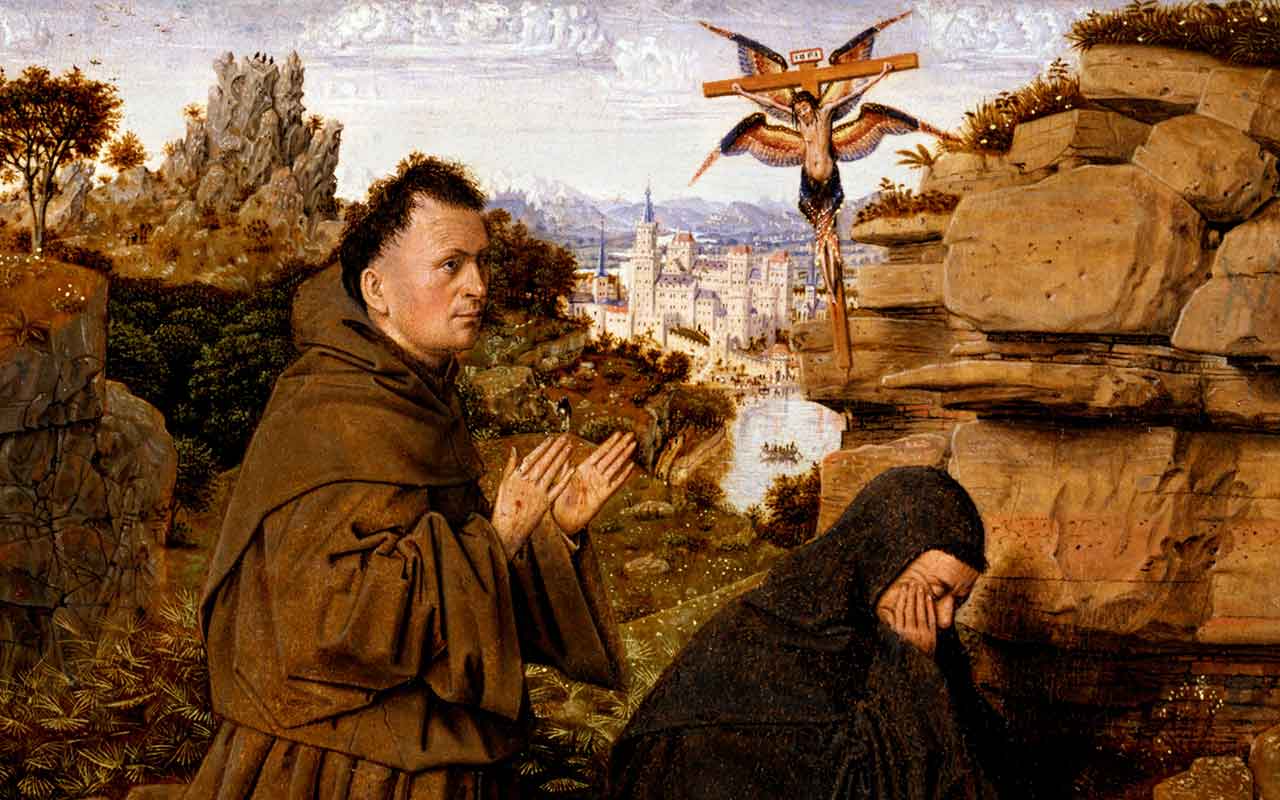
Au cours de la semaine dernière, le calendrier franciscain nous a offert deux jours de fête caractérisés par des phénomènes inhabituels, des “signes et des prodiges”. Le 17 septembre, nous avons célébré la fête des stigmates de saint François d'Assise, qui honore le fait qu'il ait reçu les plaies du Christ dans les mains, les pieds et le côté. Le lendemain, nous avons célébré la fête de saint Joseph de Cupertino, qui était connu pour “léviter” en priant. En d'autres termes, pendant la prière, il commençait à se soulever du sol.

La tradition catholique a toujours fait une place aux miracles et autres événements inhabituels, considérés comme des rappels de la présence et de la réalité de Dieu. Nous avons encore recours aux miracles dans le processus de canonisation des saints. Les gens attendent le rapport d'un miracle approuvé qui permettra au bienheureux Solanus Casey d'être déclaré saint.

Il est normal que l'homme ordinaire prenne note de ces choses et s'en étonne. Mais il y a un danger à mettre trop l'accent sur ces “signes et merveilles” et à penser que c'est cela la vraie sainteté. Nous avons toujours besoin d'être rappelés à la vertu fondamentale et d'écouter saint Paul nous dire que nous pouvons faire toutes sortes de choses “religieuses”, mais que si nous les faisons sans amour, elles ne valent pas grand-chose.

Les signes étonnants liés aux saints peuvent être considérés comme une sorte de “sceau d'approbation” pour une vie bien vécue dans la prière, la charité et la compassion. Et c'est toujours la leçon à tirer pour nous-mêmes. Nous ne devons pas rechercher des signes étonnants et des prodiges, mais nous devons faire les petites choses de notre vie avec amour. Tout ce qui va au-delà est l'affaire de Dieu. Et nous pouvons toujours prêter attention aux miracles ordinaires qui nous entourent : les colibris, les nouveaux bébés, la gentillesse des amis.

The Wooden Beam

Par le Père Tom Zelinski, OFM Cap.

In the Gospel for Friday of the 23rd Week, we have the famous image of the beam in one’s eye. Jesus gives us a teaching about self knowledge. We are not to criticize or pick at other people’s faults when we are not willing to acknowledge our own failings (Luke 6:39-42).

Down through the ages, teachers of prayer have stressed the need for self knowledge as part of a mature spirituality: from Catherine of Siena, to John of the Cross, to Teresa of Avila, to Ignatius of Loyola, down to Thomas Merton and Richard Rohr in our day.

Those who practice the 12 Steps recognize the need for self knowledge and sincerity as they take their “fearless moral inventory” and then tell their story to a willing listener (Steps Four and Five). They are willing to remove the beam of their own blindness and admit their truth.

The beam of blindness is at the center of all racism and bigotry and the large ego of people who will not admit their own shortcomings. It can be a big problem in marriage and other relationships. The beam of blindness causes people to always blame others for their problems.

So this image remains central to an honest and sincere attempt to lead a Christian life, which should also be a healthy psychological life.

“Remove the beam from your own eye first, and then try to help your brother or sister.”

Good Measure

Par le Père Tom Zelinski, OFM Cap.

The Gospel for Thursday of Week 23 is a challenging statement about Christian love. We are to love everyone. We are to love our enemies and pray for those who do us harm. We are to treat everyone the way we want to be treated. We are to lend without expecting a return. We are not to judge or condemn anyone (Luke 6:27-38).

We have heard these things many times, and each time we may wonder: Who can live like that? Perhaps we can’t, with our own power and resources. We always fall short of the ideal, and we lean on the mercy of God.

We need to recall that God treats us that way,loving us unconditionally. When we fall short, when we get angry, or hold grudges, or cling to bitterness, God continues to show us mercy and encourages us to move beyond those things, to get up and keep walking and try again.

Key to the Gospel passage is when Jesus tells us, “The measure with which you measure will in turn be measured out to you.” In other words, Jesus tells us to take an overview of our lives, perhaps each day. We are to start out with a way of “measuring” our relationships and our actions from a standpoint of gratitude, acceptance, and willingness to forgive — and not to wait for something to happen before we react.

This may be another form of those famous words of Blessed Solanus: “Thank God ahead of time,” no matter what the future holds.

September

Par le Père Tom Zelinski, OFM Cap.

These early days of September have a certain “feel” about them. Do you have the same experience? It is something about endings and beginnings. September 1st is merely a date on the calendar, but seems to carry some weight, especially aligned with Labor Day.

The roots of my feelings, I am sure, reach down to years of starting another school year after summer. Summer ending. School beginning. For me, also, it has had something to do with football, especially going back to 8th grade when I played on an organized team. All that grunting and groaning in August heat left an impression. Hardly part of my spiritual life . . . . or maybe it was!

Years of retreat ministry have left impressions of yet another fall retreat season beginning with a new theme. How in any given year, did we treat of some aspect of the life of prayer?

We move through time. Seasons come and go. And yet in each day, each moment, there stands the invitation to pause and recognize the presence of God. In the Gospel for Thursday of the 22nd week, Jesus tells his disciples to “put out into the deep.” In any season, in any moment, we are to plumb the depths inside us, into our truest self, our soul, to once again touch the presence of God.

We are in September of a strange year. How does God speak to us in this season?

Restez au courant des actualités de la Retraite des Capucins